What Size Heat Pump Do I Need?
- Free written quote, no obligation
- Licensed electrician on the connection
- Auckland-wide, all major brands
Get a free quote
Free written quote. No obligation. We reply by phone.
Sorry, that did not send. Please try again in a moment.
Thanks, we have your request
We will call you back about your free written quote.
The size of heat pump you need depends mainly on the floor area of the room, then on ceiling height, insulation, windows and how open the room is. As a rule of thumb, allow 100 to 150 watts of heating output per square metre, so a 20 m2 bedroom needs around 2 to 3 kW and a 40 m2 living area around 4 to 6 kW. Older, draughty or high-ceilinged rooms need more. We confirm the size on a free quote.
The quick answer
Find your floor area, then move across for the age and insulation of the house. The figures are heating output for a single room and a guide only.
| Floor area | Well-insulated, modern | Older, average insulation | Draughty, high stud, lots of glass |
|---|---|---|---|
| 10 to 15 m2 | 1.5 to 2.5 kW | 2.0 to 3.0 kW | 2.5 to 3.5 kW |
| 15 to 25 m2 | 2.5 to 3.5 kW | 3.0 to 4.0 kW | 3.5 to 5.0 kW |
| 25 to 40 m2 | 3.5 to 5.0 kW | 4.0 to 6.0 kW | 5.0 to 7.0 kW |
| 40 to 60 m2 | 5.0 to 7.0 kW | 6.0 to 8.0 kW | 7.0 kW and up, or two units |
| 60 m2 and over | 7.0 kW and up | Often two units or ducted | Often two units or ducted |
Heat pumps are sold by rated heating capacity in kilowatts. Check the heating figure, because the model number can mislead and the cooling figure can differ.
Heat pump size calculator
The calculator gives a range in kilowatts. Enter the floor area, ceiling height, insulation level, glazing and how open the room is. It cannot see the shape of your room, how much sun it gets or where the house leaks heat, so treat the answer as a starting point. We confirm the size when you get a free quote.
How to measure your room
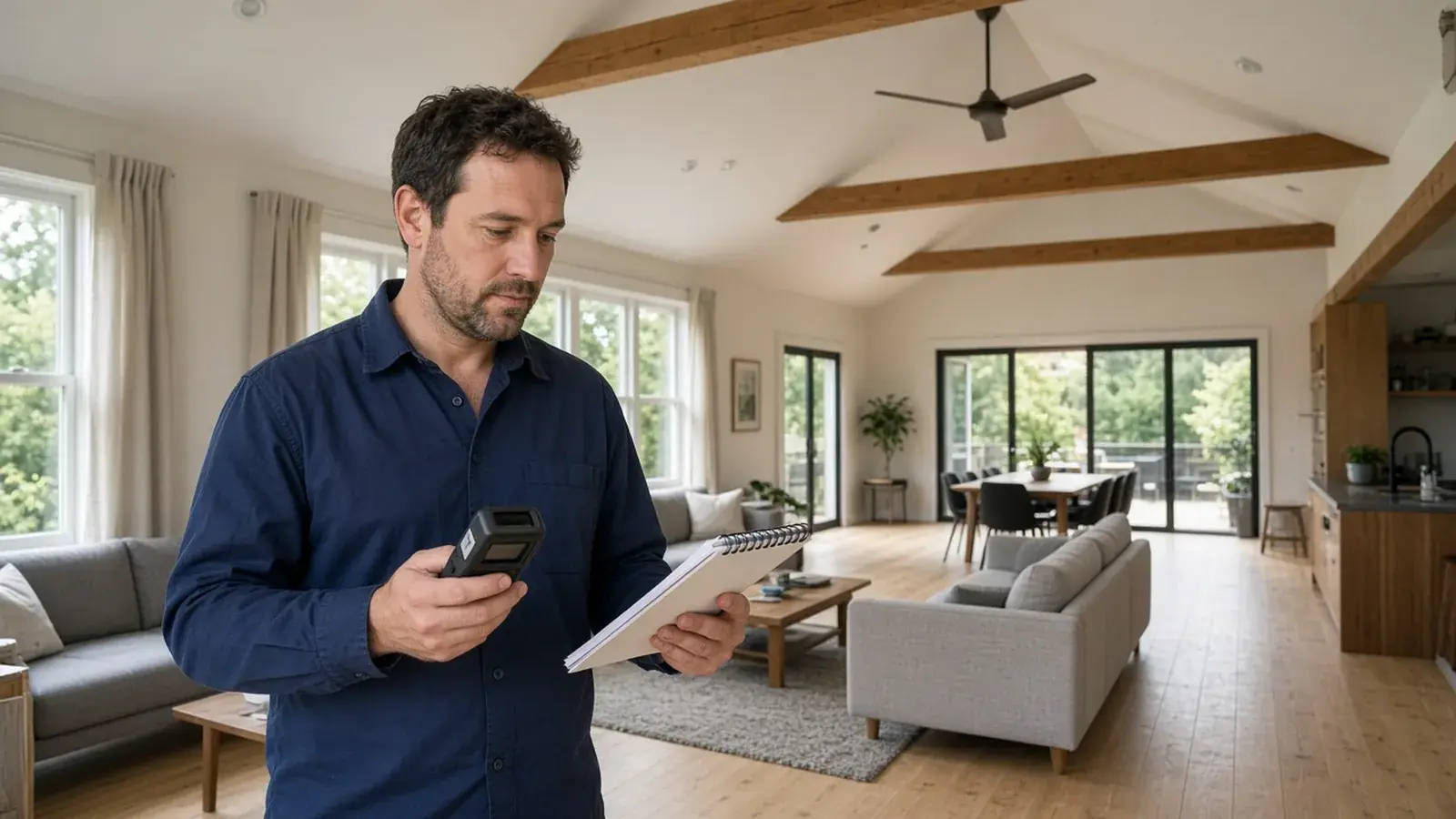
Measure the length, width and ceiling height in metres with a tape or laser measure. Multiply length by width to get floor area. If the room joins a kitchen or dining area with no door, measure the whole connected space, because the heat pump has to warm all of it. Note the windows, whether they are single or double glazed and which way they face. Your installer can confirm the size on site. Send us a photo of the room and the wall where you want the unit, and we can usually give you an estimate before we visit.
Heating output and the number on the box
Compare the rated heating capacity, because the model number can mislead. The energy rating label on a unit shows how efficient it is, and more stars means more efficient. A unit sold as a "5 kW" model may have a rated heating output a little higher or lower than that, and a different cooling output. Heating is the figure that matters in winter, so ask for it in writing.
What changes the size you need
Floor area
More floor means more air to heat, so area is the starting point.
Ceiling height
New ceilings are around 2.4 metres, and Auckland villas have stud heights of 3 metres or more, which takes more heat. Warm air rises, so a floor-mounted unit or good air circulation helps in high rooms.
Insulation
A room insulated in the ceiling, walls and floor holds heat. A 1960s or 1970s house with little insulation loses heat quickly and the heat pump has to keep up. Adding insulation is often the simplest way to cut the size of the unit you need, and the grants guide covers help with it.
Windows and orientation
Single glazing causes a lot of heat loss, especially large windows on cold, clear nights. Double glazing and thick curtains cut the loss. A room that faces the sun needs less heating than a shaded one, and a south-facing room needs more.
How open the room is
A lounge that opens into a kitchen, hallway and stairs is one big space, while a bedroom with the door shut is a single room. Open-plan living areas need more capacity than their floor area suggests.
Sizing for Auckland homes
- Villa lounge, 25 m2, 3 m stud, single glazing: treat it as a bigger room than the floor area suggests. A medium to large unit is likely, and a floor-mounted unit can heat lower down.
- 1970s open-plan living, 40 m2, joined to the dining area: a large wall unit or two units to cope with the open space.
- Modern townhouse living room, 20 m2: better insulated, so a medium unit usually does it.
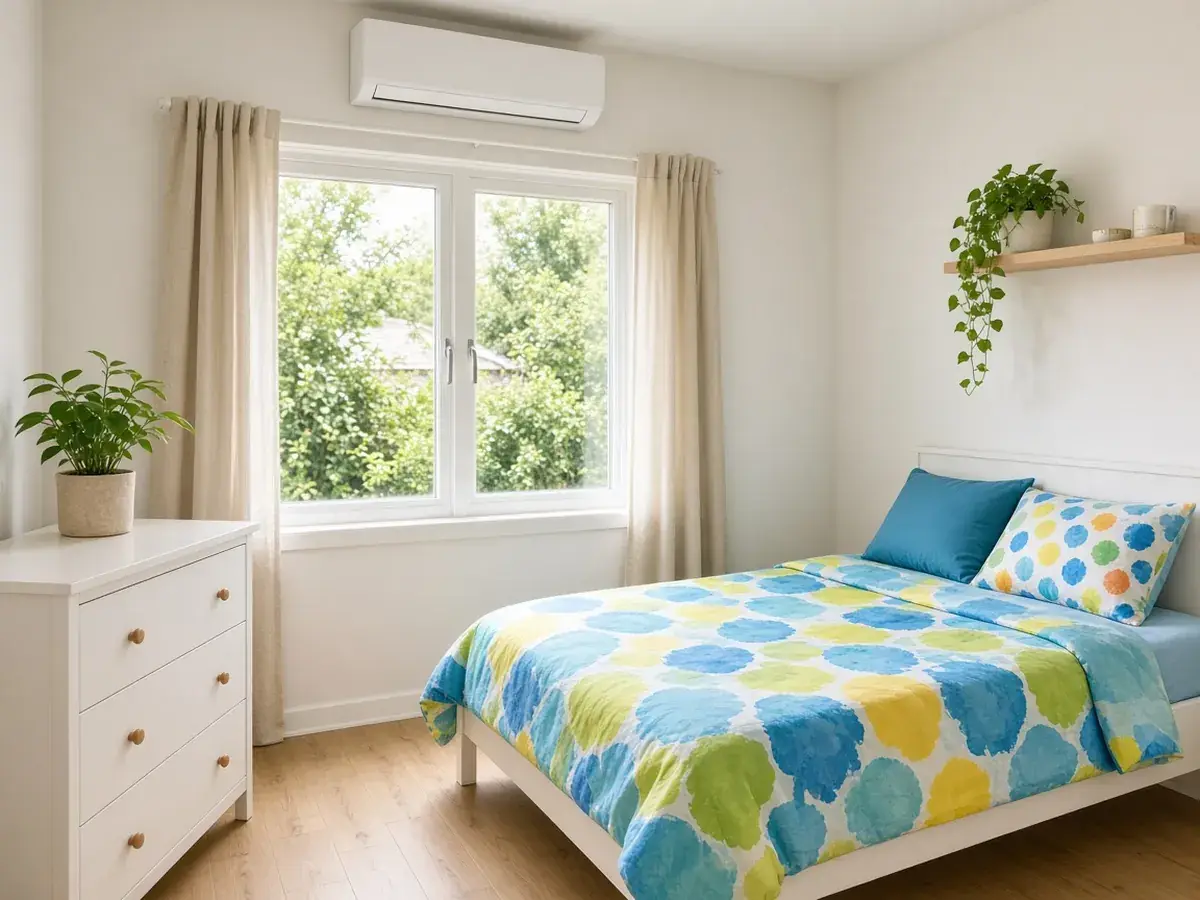
- Main bedroom, 14 m2: a small to medium unit, where quiet running matters more than output.
- Apartment lounge, 18 m2: a small to medium unit, with the outdoor unit position and body corporate rules deciding what is possible.
- Beach house near the coast: bigger glass areas and more draughts, and the outdoor unit needs protection from salt.
Too big or too small (and inverter units)
A unit that is too small runs flat out, takes hours to warm the room and still struggles on a cold night. A unit that is too big can cycle on and off and blow a stronger draught than you want. Inverter units turn down once the room is warm, which softens the problem, but the right size is still best. Aim for a unit that heats the room on a cold night and then settles to a steady output.
Sizing for several rooms
One unit will not heat a whole house unless it is open-plan or ducted. To heat a lounge and two bedrooms, you have three options:
- Separate units in each room, which gives the most control.
- A multi-split, with several indoor units on one outdoor unit.
- A ducted system for the whole house.
A big unit in a lounge will not warm bedrooms down a hallway, however hard it works.
Rentals
Rentals need a fixed heater in the main living room. We size the heat pump, install it and give you the paperwork. See Healthy Homes heating.
Mistakes to avoid
- Picking the biggest unit "to be safe"
- Ignoring ceiling height and glazing
- Putting one unit in a hallway and hoping it heats three rooms
- Forgetting the outdoor unit position, which affects pipe length
- Skipping a measure-up for a large or awkward room
What next
Once you know the size, see heat pump installation for how a job runs, and our installation cost guide for what shapes a quote.
Talk to a person about this job.
Questions
How do I work out what size heat pump I need?
Start with the floor area of the room, then adjust for ceiling height, insulation, window area and how open the room is to the rest of the house. As a rough starting point, many rooms need around 100 to 150 watts of heating per square metre. A professional measure-up gives a more reliable answer.
What size heat pump do I need for a 20 square metre room?
A well-insulated 20 m2 room often needs about 2 to 3 kW of heating output, and an older or draughty room may need more. Bedrooms usually suit a small unit, and a lounge of that size often suits a medium one.
What size heat pump do I need for a 40 square metre living room?
Roughly 4 to 6 kW of heating output for an insulated room, and more if the room is open to a kitchen and dining area, has high ceilings or has a lot of single glazing. We measure and confirm.
Is it bad to buy a heat pump that is too big?
Yes. An oversized unit can cycle on and off and may blow a strong draught. It is better to choose the size the room needs and let it run steadily.
What happens if my heat pump is too small?
It runs flat out, never reaches the temperature you want and may wear faster. A small unit also struggles on the coldest Auckland nights.
What size heat pump suits a rental?
Rentals need a fixed heater in the main living room. We size the heat pump to the room and give you the numbers.
Do I need a different size for cooling than for heating?
Heat pumps are usually sized for heating in New Zealand, and cooling output is similar or a little lower. In Auckland the humid summers are more about comfort and drying the air, so heating needs normally set the size.
What size room will a 6 kW heat pump heat?
Roughly a large living area of around 40 m2, depending on the insulation, the windows and how open the room is. A draughty or high-ceilinged room needs more capacity.
What do heat pump energy ratings mean?
The energy rating label shows how efficient the unit is. A higher star rating means it uses less power for the same heat. Compare the rating alongside the rated heating capacity.
What size heat pump do I need for a large house?
A large house usually needs more than one unit, a multi-split or a ducted system. We work out the size room by room on a visit.
Get a free quote
Tell us the address and the job. We will call you back.
Request a callbackFree written quote. Licensed electrician. Auckland-wide.
Tell us about the job
Free written quote. No obligation. We reply by phone.
Sorry, that did not send. Please try again in a moment.
Thanks, we have your request
We will call you back about your free written quote.